
Mohammad Abbas claimed four wickets as Pakistan controlled much of the opening day at Lord's, but England recovered through Cox, Smith and Atkinson to reach 248-9.

Pakistan pacer Mohammad Abbas expressed deep concern over the team's persistent issues, including poor fielding and an inexperienced pace attack, following their heavy 194-run defeat to England at Lord's, marking their 10th loss in 11 away Tests.

England moved to the brink of victory at Lord's as Dan Lawrence's unbeaten fifty extended their lead to 357, leaving Pakistan facing an almost impossible chase.

Pakistan pacer Haris Rauf has expressed his strong desire to play Test cricket, aiming for a spot in the upcoming series against Sri Lanka, as the team grapples with significant struggles in its pace department.

Pakistan's lower order staged a spirited late fightback, with debutant Razaullah smashing 81 and sharing a 121-run stand with Abbas to frustrate England before dismissal.

England closed in on a first home Test series win for two years as Pakistan slumped to 53/3 at lunch on the fourth day of the second Test at Lord's on Sunday.

As the cycle enters a crucial phase, the teams now look to strengthen their case for a top-two finish.

Joe Root's unbeaten 62 guided England to a dominant eight-wicket victory in the third Test against Pakistan, securing a 3-0 series whitewash despite early batting jitters. This marks England's first series win in 19 months.

Pakistan captain Babar Azam confirmed that Shan Masood fractured his finger during the first ICC World Test Championship match against the West Indies, contributing to Pakistan's 90-run defeat. The injury forced Masood to bat at No. 8, and Babar highlighted the team's top-order batting failures and lack of partnerships. West Indies' Justin Greaves was named Player of the Match for his five-wicket haul.

Visitors Pakistan replaced seven players and their head coach on Monday, after suffering two heavy losses to England in their ongoing three-Test series.

Former Pakistan captain Misbah-ul-Haq has resigned from the men's national selection committee and as a batting consultant at the National Cricket Academy.

'There is no harm in sending young players to show the world that Pakistan cricket still has talent.'

Ollie Robinson's devastating two-wicket opening over left Pakistan reeling at 52-2, with England needing just eight wickets to seal a 3-0 series sweep at Edgbaston.

Former Australia batter Usman Khawaja has criticised the Pakistan Cricket Board's director of high performance, Aaqib Javed, over his comments regarding the team's major shake-up during the Test series against England.

Pakistan were bowled out for 133 as England's bowlers tore through their batting lineup in the third Test at Edgbaston.

Pakistan Test captain Babar Azam sustained a hand injury during a warm-up match, raising concerns about his availability for the upcoming three-match Test series against England, which is part of the ICC World Test Championship 2025-27.

England seized total control at Lord's after bowling Pakistan out for 110, building a 261-run lead as Ollie Robinson and Jofra Archer dismantled their batting.

Ollie Robinson and Josh Tongue claimed five wickets each to dismiss Pakistan for 171 in the first Test at Headingley, before Joe Root's unbeaten 37 guided England to 112-2.

England pacers Ollie Robinson and Josh Tongue made history by becoming the first England bowlers since 2006 to claim five-wicket hauls in the same innings, leading them to split the match ball as a unique memento after their dominant performance against Pakistan.

West Indies all-rounder Justin Greaves made history by becoming the first bowler in Test cricket to take wickets in five consecutive maiden overs during the opening Test against Pakistan in Tarouba.

A dominant display against a hugely disappointing Pakistan side saw the game wrapped up before tea on the third day despite the loss of more than half a day's play to rain.

'I do not believe there is one way of playing Test cricket. You have got to be adaptable and play the situation.' 'It is never the same throughout five days, there is different challenges and you have got to adjust to the ebbs and flows throughout.'

Babar Azam has returned to lead Pakistan's Test cricket team after Shan Masood was axed from the role.

Rising sensation Vaibhav Sooryavanshi has made a significant jump in the latest ICC Men's T20I Batting Rankings, climbing 230 places to 48th after an impressive Player of the Series performance against Zimbabwe. India teammate Ishan Kishan leads the T20I batting rankings with a career-best 910 points, the third-highest rating ever recorded.

Trump seems to have estimated that Ghalibaf is a pragmatic politician who is receptive to close relations with the US and is enthusiastic about fostering business and economic ties in particular, points out Ambassador M K Bhadrakumar.

Pakistan's cricket board has appointed former captain Sarfaraz Ahmed as the head coach of their Test team for the upcoming two-match series in Bangladesh, succeeding Jason Gillespie.
Two-time finalists India are placed fifth and face a challenging path to secure a top-two finish.

A Facebook user impersonating a Shia cleric has been booked for allegedly inciting animosity and hatred between communities. The action follows a complaint by Shia cleric Maulana Mirza Mohammad Yasoob Abbas, who disavowed the misleading posts circulated under his name.

Donald Trump has issued a severe warning to Iran, threatening 'decimation' with '1,000 missiles' if the nation pursues alleged assassination plots against him, while Iranian officials accuse the US of violating a MoU amidst ongoing diplomatic talks.

The US Central Command announced a new wave of strikes against Iranian military infrastructure, aiming to degrade Tehran's ability to threaten civilian mariners and commercial vessels. This comes as US President Donald Trump described the situation as a 'skirmish' and suggested Iran wants to 'make a deal,' while Iran's Foreign Minister warned of a 'decisive response' to any aggression.

Iranian Foreign Minister Seyed Abbas Araghchi announced the official end of the war and warned that any Israeli attack on Lebanon would violate an agreement between Iran and the United States. He also stated that negotiations on nuclear issues and sanctions lifting would begin on Saturday, led by Iran's Parliamentary Speaker M B Ghalibaf and US Vice President J D Vance.
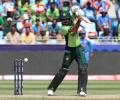
This year's roster sees ten players each placed in Categories B, C, and D. Notably, no player has been selected for Category A in this cycle, the PCB said in a statement.

Supreme Leader Mojtaba Khamenei has reshuffled Iran's political and national-security establishment, appointing former SNSC Secretary Mohammad Bagher Zolghadr as his political adviser and veteran IRGC commander Mohsen Rezaei as his representative on the Supreme National Security Council, consolidating power amid the West Asia crisis and Strait of Hormuz tensions.

US President Donald Trump announced a finalised peace deal between the US and Iran, set for signing on June 19 in Switzerland, with key figures like J D Vance, Steve Witkoff, and Jared Kushner from the US side, and Abbas Araghchi and Mohammad Bagher Ghalibaf representing Iran, alongside Pakistani mediators Field Marshal Asim Munir, Shehbaz Sharif, Ishaq Dar, and Mohsin Naqvi, playing crucial roles in the diplomatic breakthrough.

The United States has launched a fresh wave of precision strikes, hitting approximately 90 Iranian military targets deep inside Iran, further intensifying a rapidly expanding regional conflict, with Tehran warning of severe retaliation.

Iranian President Masoud Pezeshkian is on a state visit to Pakistan to discuss the full implementation of an agreement signed between Iran and the US, alongside regional and international developments. The visit also aims to strengthen bilateral cooperation across various sectors, following recent high-level talks between the US and Iran in Switzerland regarding regional security.
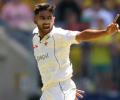
Fast bowler Khurram Shahzad and Mohammad Abbas have been named in Pakistan's team for the first Test starting on Thursday in Centurion - the first red-ball assignment for newly-appointed interim coach Aqib Javed.

Delegations from the US and Iran have arrived in Islamabad for talks aimed at resolving the conflict between the two nations, following a ceasefire brokered by Pakistan. The negotiations are being closely watched due to their potential impact on regional security and global diplomacy.

The US and Iran have agreed on a roadmap aimed at reaching a final agreement within 60 days after hours-long talks at the Swiss resort of Burgenstock, mediators Qatar and Pakistan said on Monday, describing the progress as "encouraging."

It is an unusual choice to depute a retired general for the funeral of a revered religious figure but a thoughtful one in an attempt to inject verve into the bilateral relationship and restore the equilibrium in India's West Asian policies, notes Ambassador M K Bhadrakumar.
